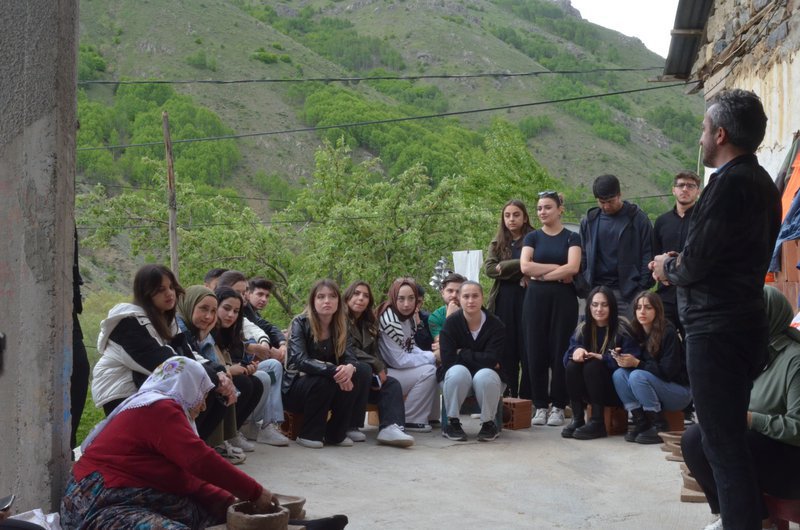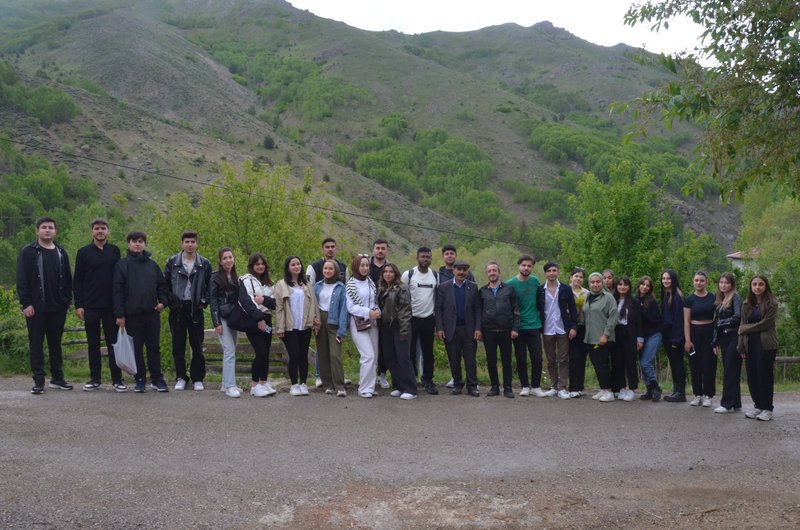
The Tourism Guidance Department of our faculty organized a practical field trip to the villages of Dölek and Sarıçiçek in our province. The technical trip, organized as part of the Anatolian Folk Culture and Handicrafts course included in the second-year curriculum, was supervised by Assoc. Prof. Dr. İsmail ÇALIK, the course instructor. The first stop on the technical trip, attended by our Tourism Guidance students, was Sarıçiçek Village, one of the central villages of our province. Located 43 km from Gümüşhane city center, Sarıçiçek Village offers a vibrant array of colors with the yellow highland flowers blooming in June. Another distinctive feature of Sarıçiçek Village is its wood-carved village rooms, where the village room culture is preserved. Completed by masters and apprentices over a period of approximately three years without seeing each other, these rooms, rich in motifs and decorations, stand out with their harmony of decoration, vibrant colors, and the use of the woodwork and decorations using the kundekari technique. The story of the village rooms is told below:
''In the old days, the village's wealthy man, Hacı Ömer Ağa, wanted to build a guesthouse-style room befitting his reputation to welcome guests to his village on the Silk Road. He hired a craftsman named Tahir from the Of district of Trabzon to build the room. The master and his apprentice came to the village to build it. During the construction, the master and apprentice had a falling out. As the apprentice was about to leave the village, the agha asked the apprentice to build a room as well. The master and apprentice built two separate rooms over three years, without seeing or imitating each other. To avoid copying each other, no one entered. Thus began a race between them. Ultimately, master and apprentice competed. It was said that the apprentice surpassed the master. When the rooms were completed, the villagers admired the room built by the apprentice the most. Legend has it that Tahir Usta, filled with pride after his apprentice's work was admired more, gave up his craft''.
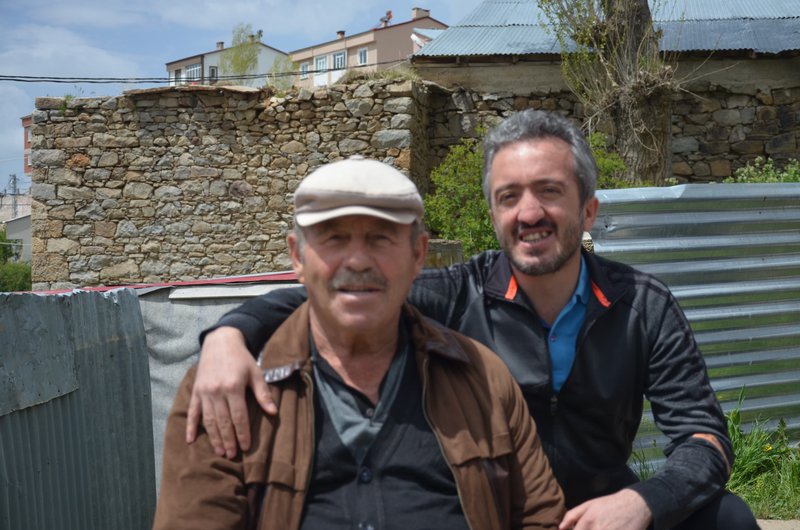
We would like to thank all the villagers, especially our uncle Necmi Gündüz, who hosted our students in Sarıçiçek Village and gave information about the historical process of the village chamber.
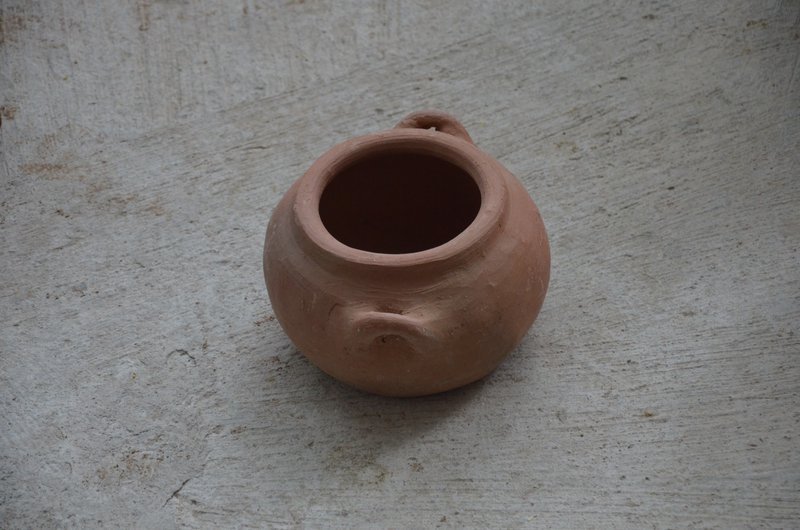
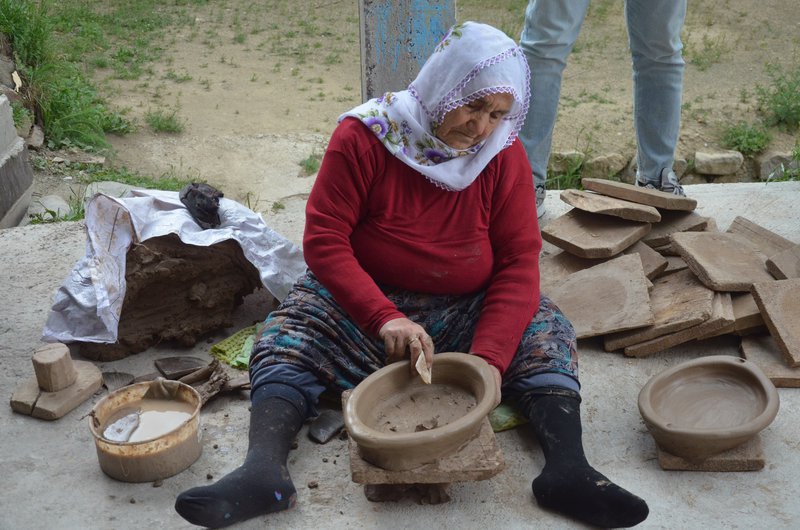
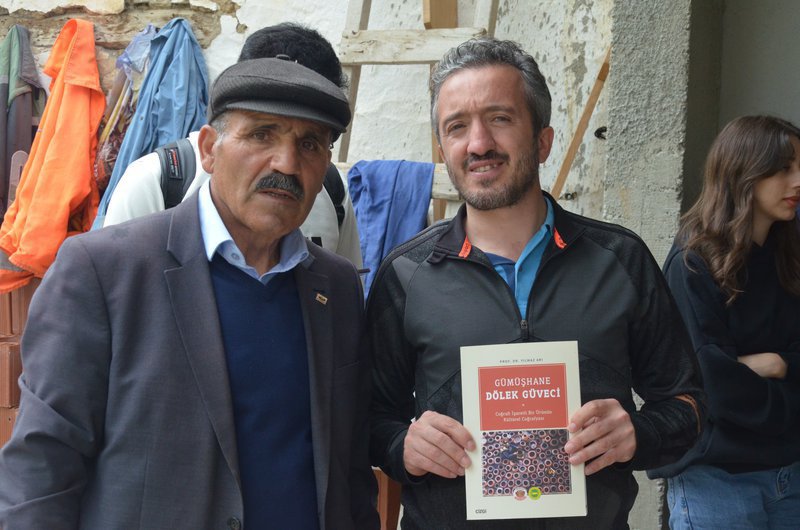
Our next stop after Sarıçiçek Village was Dölek Village, famous for its gudu (pottery). Located 35 km from Gümüşhane city center, Dölek Village lies within the central district. We were greeted in Dölek by our former village headman, İlhan Çolak. Throughout history, gudu (pottery making) has been a prominent occupation and source of income for the villagers. Beyond just a source of income, gudu making is a way of life for the villagers. The villagers express their longing, joy, and sorrow through this method.
The stages of making dölek gudu are difficult and demanding. Bringing the soil to the village, making and sorting the clay, transforming it into gudu, drying, firing, and ziling all present a variety of challenges. The finest examples of wheelless pottery spread from Dölek Village to other regions in the past. For obvious reasons, new gudu masters are not being trained in Dölek Village. Our country's poor luck in the craft reveals its dark side here as well. The unique aspects of dölek gudu are that it is made by women and does not use a wheel. For years, only women have been transforming soil into gudu. After hearing information about this ancient Anatolian culture from our aunt Menşure Arı and our brother İlhan Çolak, we set off for Gümüşhane with our students.